Velocity at What Price? Rethinking Expedited Shipping Before It Hollows Out Your Margins
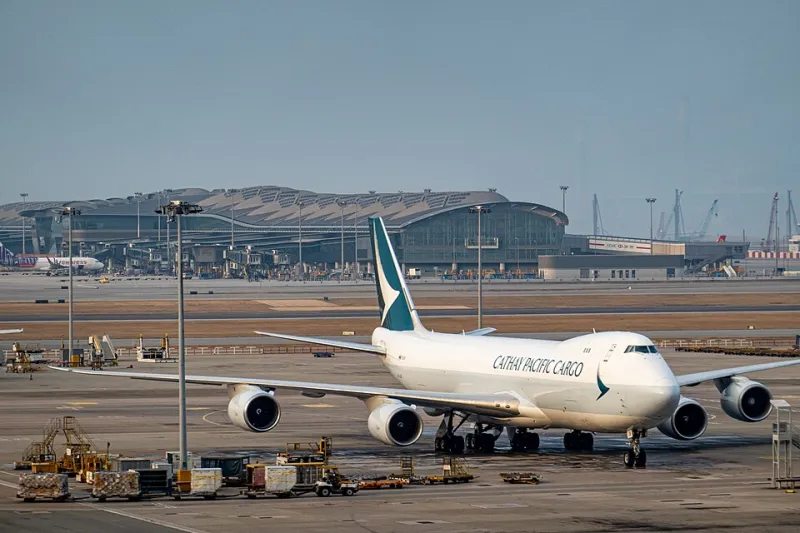
Photo: Iswzo, CC BY-SA 4.0, via Wikimedia Commons
Speed sells. In global commerce, the ability to deliver quickly has become a differentiator that U.S. enterprises actively market to international buyers. Yet behind that competitive posture lies a financial reality that many organizations have been slow to confront: expedited logistics, applied without discipline, can erode the very margins that global expansion was meant to generate.
The pressure to move fast is understandable. Customer expectations — shaped in no small part by domestic e-commerce norms — have migrated into B2B and industrial trade relationships. Procurement teams in Europe, Southeast Asia, and Latin America increasingly benchmark U.S. suppliers against each other on fulfillment speed. Falling behind on delivery responsiveness is a legitimate commercial risk. But defaulting to premium freight as the solution to every timeline concern is a different problem entirely, and one that deserves far more strategic attention than most enterprises currently give it.
The Anatomy of an Expedited Shipment Budget
When logistics teams audit their freight spend in granular detail, a consistent pattern tends to emerge: a disproportionate share of expedited shipments were not, in retrospect, genuinely time-sensitive. They were processed as urgent because the request arrived late in the planning cycle, because internal systems failed to flag available inventory sooner, or simply because "rush" had become the path of least resistance for a supply chain team under pressure.
Air freight can cost anywhere from four to six times more than ocean freight on a per-unit basis, and that multiple expands further when surcharges, fuel adjustments, and priority handling fees are factored in. For enterprises shipping across multiple trade lanes simultaneously, even a modest reduction in the percentage of shipments routed through premium channels can translate to material annual savings — often in the range of seven to twelve percent of total freight expenditure, depending on industry and volume.
The challenge is that these costs rarely surface as a discrete line item demanding executive attention. They are absorbed into cost-of-goods calculations, attributed to "market conditions," or rationalized as the price of maintaining customer relationships. In that sense, expedited freight is one of the more effective silent margin killers in international trade operations.
Distinguishing Genuine Urgency from Operational Habit
The first step toward recovering those margins is building a framework that distinguishes between shipments that are legitimately time-sensitive and those that have been categorized as urgent by default.
Genuine urgency typically falls into a handful of identifiable categories: contractual delivery obligations with penalty clauses, production line support where a delayed component creates downstream stoppage, perishable or time-dated goods, and certain regulatory or compliance-driven deadlines. These scenarios justify premium freight investment because the cost of delay measurably exceeds the cost of expediting.
Habit-driven urgency is more insidious. It tends to originate in demand forecasting gaps, where inventory signals are not transmitted quickly enough through the supply chain to allow standard lead times. It also emerges from internal approval bottlenecks — purchase orders that sit in queues longer than they should, compressing the window available for standard routing. And it can stem from customer service commitments made without logistics input, where promised delivery dates are set before freight capacity has been confirmed.
Enterprises that invest in mapping the origin of their expedited requests — not just the shipments themselves — frequently discover that a substantial portion could have been handled through standard channels had the triggering event occurred 48 to 72 hours earlier. That is a process problem, not a logistics problem, and it is far cheaper to fix.
Cost-Recovery Strategies That Preserve Responsiveness
The goal is not to eliminate speed as a commercial capability. It is to ensure that speed is deployed with precision rather than habit. Several strategies have demonstrated consistent results for U.S. exporters operating across complex international networks.
Freight mode tiering with defined escalation criteria. Rather than allowing individual logistics coordinators to make unilateral decisions about routing, leading enterprises establish formal tiering protocols that specify the conditions under which air freight, ocean freight, or expedited ground options are authorized. These criteria are reviewed periodically against actual shipment outcomes to calibrate their accuracy.
Demand signal integration across the supply chain. When inventory management systems, order management platforms, and logistics execution tools share data in near-real time, the window for standard routing decisions expands significantly. Many enterprises still operate with meaningful latency between when demand is recognized and when fulfillment is initiated — latency that consistently manufactures urgency that did not need to exist.
Customer segmentation by delivery sensitivity. Not all international buyers value speed equally, and pricing structures that assume they do will consistently misallocate logistics investment. Segmenting customers by their actual delivery sensitivity — verified through order history and account-level conversations — allows enterprises to concentrate premium freight resources where they generate the greatest commercial return.
Carrier relationship leverage. U.S. exporters with significant freight volume often hold more negotiating leverage with carriers than they exercise. Consolidating expedited freight with a smaller number of preferred partners, and committing to volume thresholds in exchange for rate certainty, can reduce the unit cost of necessary rush shipments while maintaining service quality.
Post-shipment auditing as a feedback mechanism. Systematically reviewing expedited shipments after the fact — assessing whether the urgency was warranted and what process failure, if any, created the need — builds institutional knowledge that gradually reduces the frequency of avoidable premium freight decisions.
The Strategic Dimension
For enterprises operating within a global trade strategy, logistics cost discipline is not merely an operational concern. It directly influences the competitive pricing positions that U.S. exporters can sustain in international markets. When freight premiums are absorbed silently into product costs, they gradually erode the price competitiveness that market entry strategies depend upon — particularly in regions where local or regional competitors operate with lower baseline logistics costs.
There is also a risk dimension that extends beyond direct cost. Supply chains that rely heavily on expedited freight to compensate for planning inefficiencies are inherently more fragile. When carrier capacity tightens — as it does periodically across major trade lanes — enterprises that have not developed the internal discipline to plan ahead find themselves competing for limited premium freight availability at elevated spot rates, compounding an already expensive habit.
The enterprises that manage this most effectively tend to share a common characteristic: they treat logistics velocity as a strategic resource to be allocated thoughtfully, rather than a default response to be triggered whenever timeline pressure appears. That distinction, applied consistently across a global shipping program, is where margin recovery becomes not just possible but systematic.
For U.S. businesses pursuing durable competitiveness in international markets, the question is worth asking plainly: how much of your expedited freight spend is genuinely buying you something — and how much is simply the cost of a process that has not yet been fixed?